Zamek Królewski

About the project
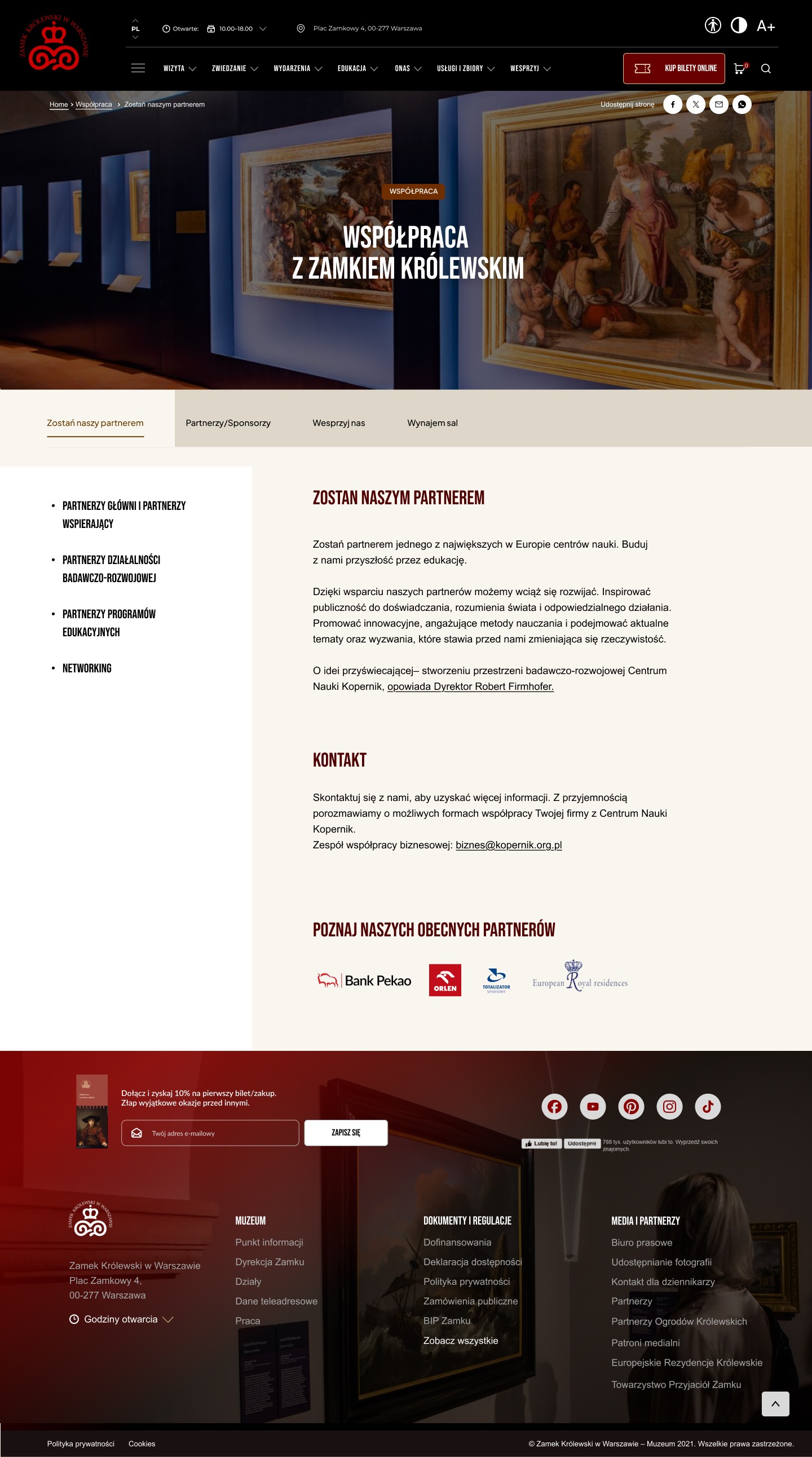
For the Royal Castle Museum in Warsaw, I developed a comprehensive UX/UI design for a new website. The goal was to simplify navigation, improve accessibility, facilitate ticket booking and event overviews, and create a prototype that met the needs of various visitor groups.
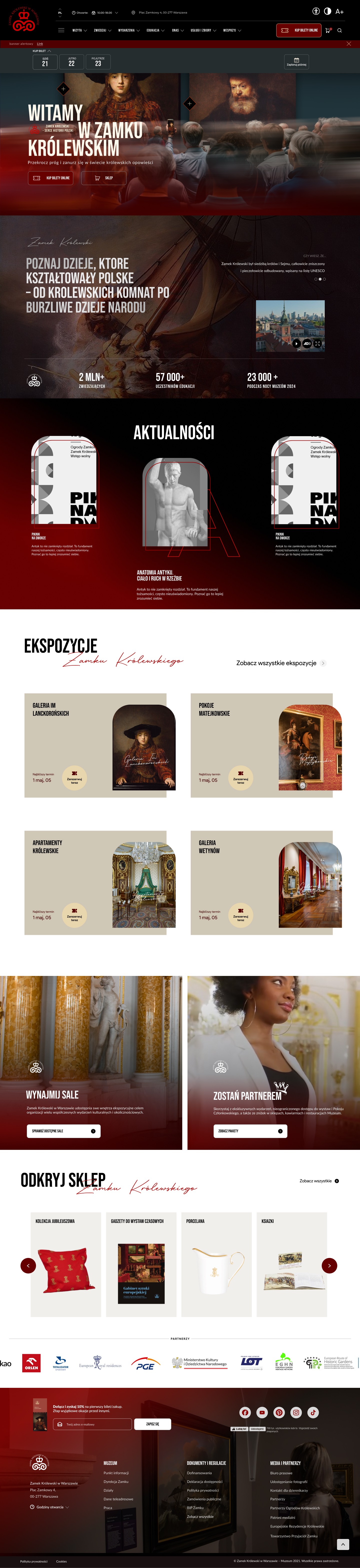
The new version of the Royal Castle in Warsaw website combines tradition with modernity.
The design focuses on clear information architecture, intuitive navigation, and a consistent user experience – both for visitors to the castle and users of its extensive online collections.
Home page

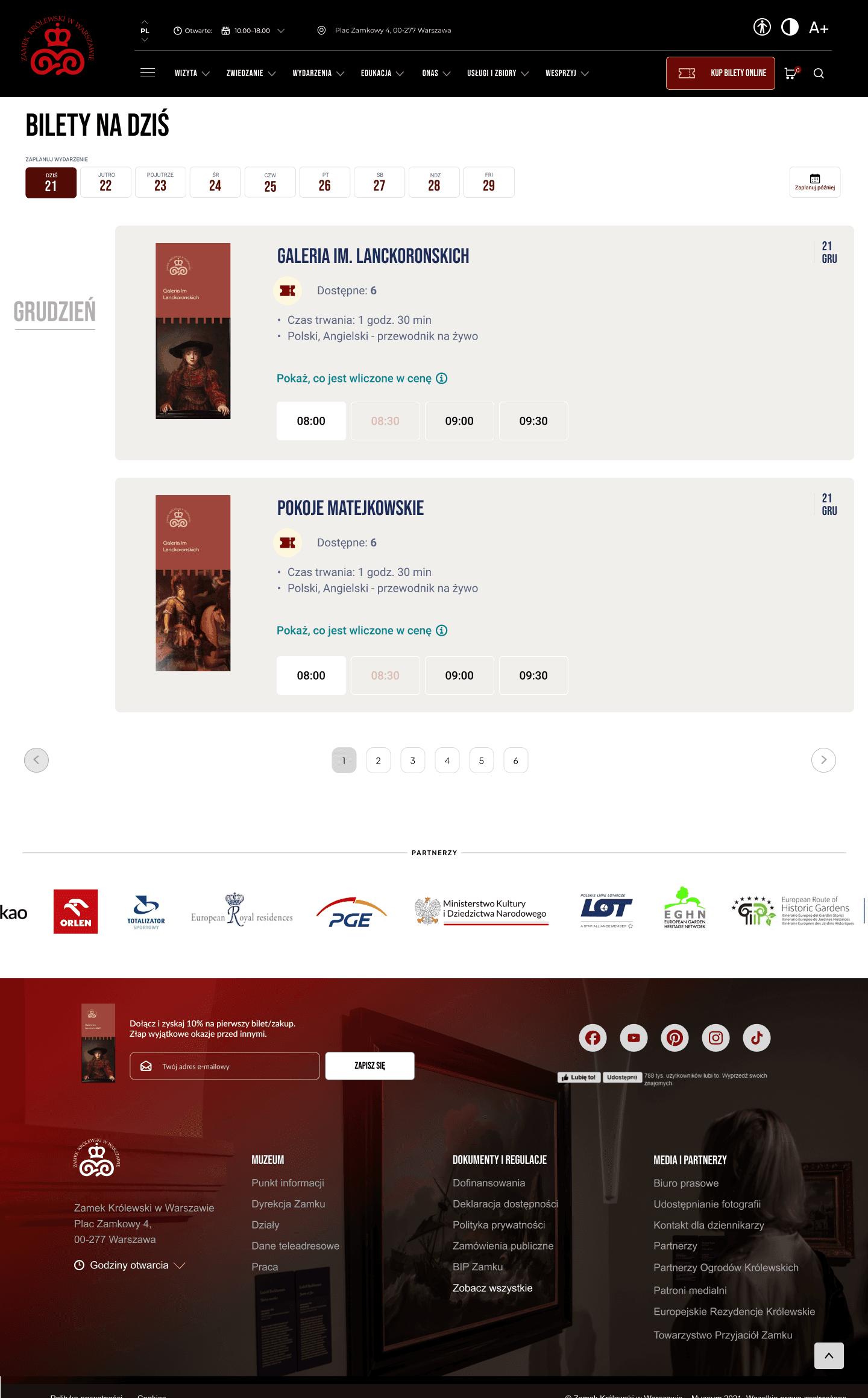
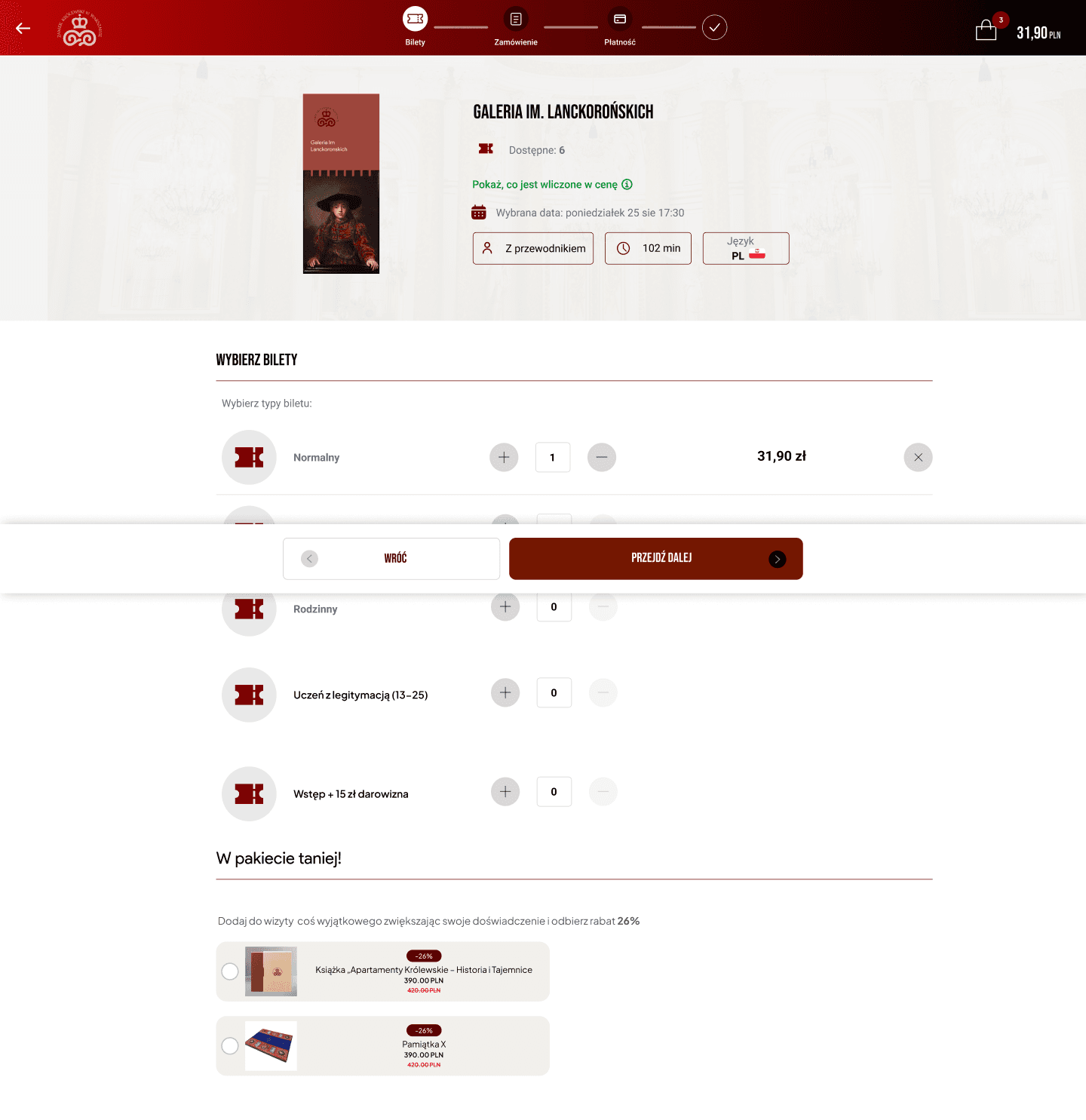
The ticket purchasing process has been redesigned with simplicity and clarity in mind. Analysis from Google Analytics and HotJar revealed key barriers—too many steps, unclear messaging, and a lack of visual cohesion. New mockups and a prototype simplify the entire process, from ticket selection to payment, intuitively guiding users through each step.
Ordering tickets online
The ticket ordering system was designed with simplicity and user convenience in mind. Clear information architecture, distinct messages, and a clear structure of steps allow you to quickly move from exhibition selection to payment. The process has been shortened, simplified, and adapted to various devices.
Ordering tickets to the Royal Castle has become part of the visitor's pleasant experience. Thanks to clear screens, distinct action buttons, and a logical step structure, users can easily select the date, ticket type, and pickup method. The design combines aesthetic appeal with practical functionality and attention to detail.
The mockups and prototype of the "Order a Ticket" path were developed based on user behavior analysis and testing with a group of visitors. The priority was to shorten the purchasing process and ensure consistency with the website's new visual identity. The final prototype allows for the rapid testing of various UI variants and verification of solutions before implementation.
Exhibition Profile
A new way of presenting exhibitions – a combination of content, emotion and functionality.
The new exhibition profile was designed as a space that combines the exhibition narrative with practical functions—ticket purchases, information about accompanying events, and related products. The site's structure guides the user from the curatorial narrative to specific actions, maintaining a balance between content and the visual experience.
The new events calendar has been designed as a dynamic timeline, combining a clear schedule with inspiring content presentation. Users can view events daily or weekly, and category and date filters allow them to quickly find items of interest.
Instead of a classic list, a visual rhythm of cards has been implemented—each event is distinguished by a color, photo, or icon representing the activity type. The result is an intuitive, engaging system that not only informs but also encourages participation. The calendar integrates various types of content (exhibitions, workshops, concerts), creating a cohesive user experience based on exploration and inspiration.
Event View
A calendar that inspires and organizes – all in one place.
Digital Collection
A modern experience of discovering art – intuitive, visual, accessible.
The Digital Collection is an external service of the Royal Castle, whose goal was to make the museum's rich resources available in a modern, intuitive online format. I created a clear information structure that allows users to easily browse works, filter results, and discover the collection by theme, or even by selecting an era on the timeline. The project combines high aesthetics with accessibility and functionality, bringing culture to a wide audience.
The Royal Castle has opened its collections to everyone in the form of a Digital Collection. I designed an experience that allows users to discover works of art, documents, and archives in an interactive and engaging way. Every element of the interface was designed to guide users through the history of the place and its heritage, regardless of the device or context of use.
The Digital Collection project focused on a clear information architecture and visual organization of content. Designed mockups and prototypes focused on browsing ergonomics, optimal use of screen space, and a coherent object card system. The result is a modern interface that combines database functionality with the aesthetics of a cultural institution.
The second variant of the e-collection is inspired by the Pinterest layout, with a flexible grid of objects that encourages visual exploration. Instead of traditional categories, users navigate the collection intuitively, discovering works through images, tags, and intelligent contextual filters.
Virtual Castle
Interactive Castle map – discover, click, book tickets in seconds.
The Virtual Castle is an interactive bird's-eye view of the building, allowing users to intuitively select spaces and purchase tickets directly from the visualization. Clicking on a point displays a panel with a description of the exhibit and a quick booking option. The design combines immersion, simplicity, and functionality in a single experience.
Effects and results
See how my changes contributed to better results for the Royal Castle.